
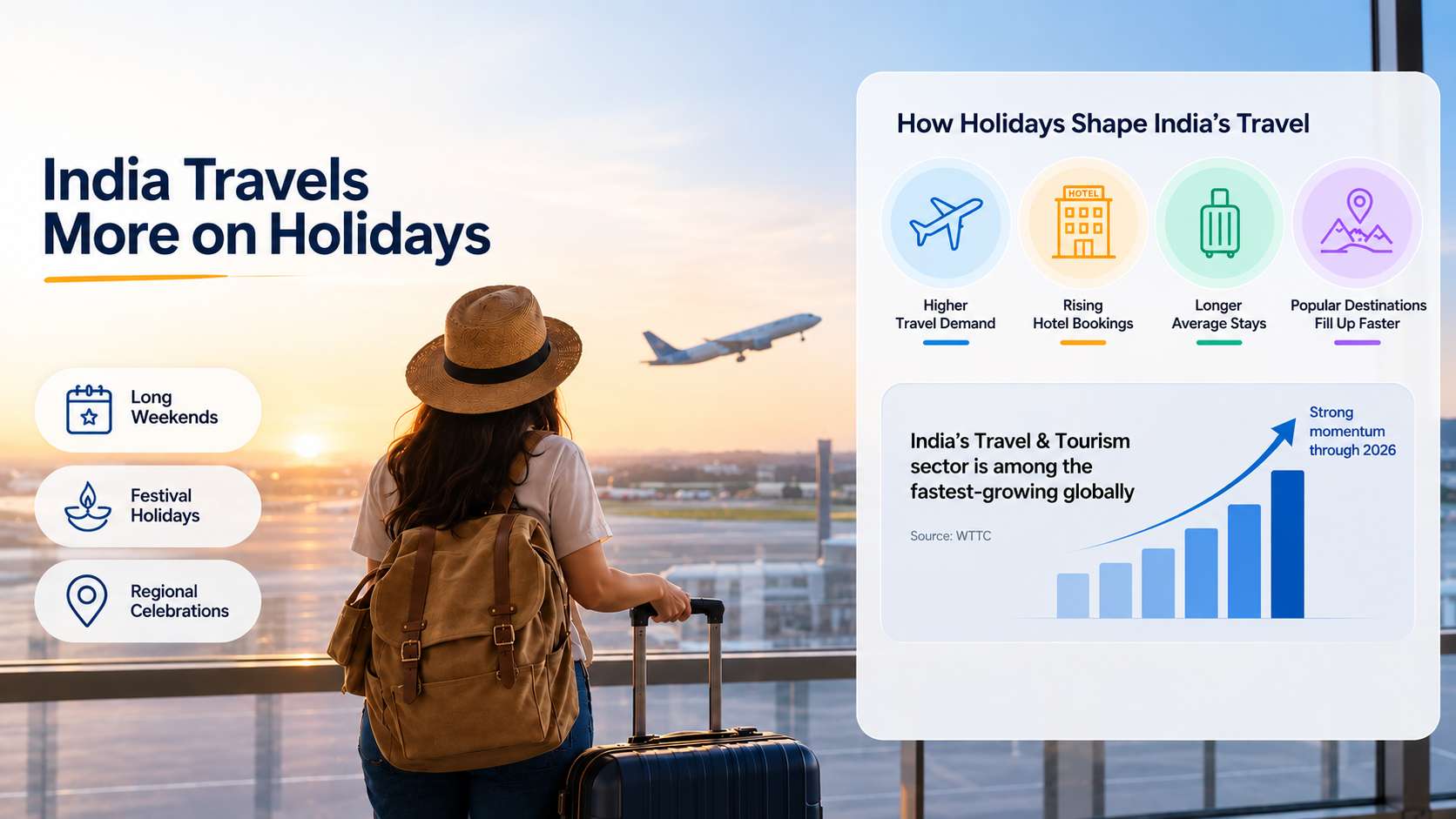
From long weekends to regional festivals, India’s holiday calendar is quietly transforming travel demand and hotel booking behaviour.
Why does every long weekend in India feel the same?
Highways are busier than usual. Hotels start filling up weeks in advance. Flights become harder to book. Popular hill stations, beaches, pilgrimage destinations, and city staycation hotspots are packed with travellers looking for a short escape.
It is a familiar sight across the country. But beyond the crowds lies a much larger story.
Public holidays have quietly become one of the strongest drivers of India’s domestic travel economy. Every long weekend influences when people travel, how early they book, how long they stay, and even the type of accommodation they choose. What was once considered just a break from work has evolved into a major catalyst for the hospitality industry.
According to the World Travel & Tourism Council (WTTC), India continues to be one of the world’s fastest-growing travel and tourism markets, with the sector expected to maintain strong momentum through 2026, driven by robust domestic travel, rising visitor spending, and increasing demand for leisure and business travel. As the industry enters its next phase of growth, long weekends, festival holidays, and regional celebrations are emerging as important demand catalysts that influence hotel bookings, occupancy levels, and travel planning across the country
For hotels, travel platforms, and destination partners, public holidays are no longer simply busy weekends. They have become predictable demand cycles that influence pricing strategies, inventory planning, staffing decisions, and marketing campaigns.
The Rise of the long-weekend economy
The way Indians travel has changed significantly over the past few years.
Instead of waiting for one long annual vacation, many travellers now prefer multiple short breaks throughout the year. A public holiday that falls on a Friday or Monday creates the perfect opportunity for a three or four-day getaway. Even a mid-week holiday often encourages people to take an additional leave day and extend their break.
This behavioural shift has contributed to the emergence of what many industry experts describe as the long-weekend economy.
Destinations located within driving distance of major cities have become key beneficiaries of this trend. Hill stations, beaches, heritage destinations, wildlife parks, and nearby staycation locations witness a noticeable increase in hotel occupancy during these periods.
As domestic travel continues to grow, long weekends are becoming increasingly important revenue periods for hotels across both leisure and business destinations.
Booking behaviour is evolving
Public holidays are also changing how travellers book their accommodation.
Many people now begin planning as soon as annual holiday calendars are announced. They compare destinations, explore hotel options, monitor prices, and secure bookings well in advance to ensure better availability and value.
At the same time, technology has encouraged spontaneous travel. Real-time pricing, instant booking confirmations, digital payments, and mobile-first travel platforms allow travellers to make last-minute decisions with greater confidence than ever before.
The result is a combination of advance planning and impulse bookings, creating a more dynamic booking cycle for hotels throughout the year.
Every holiday creates a different travel pattern
Every public holiday generates its own travel behaviour.
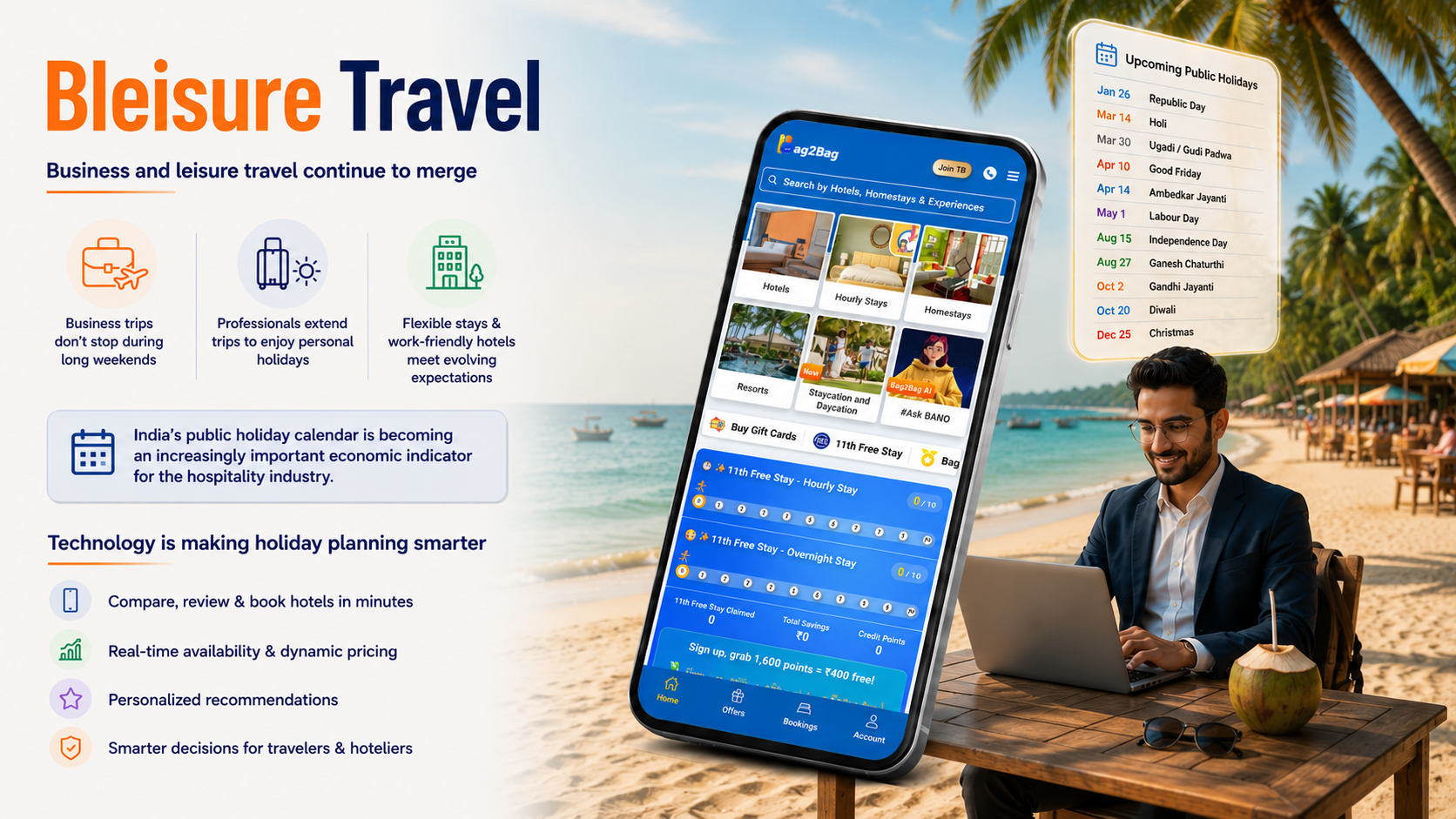
Summer vacations continue to attract families travelling with children, while Valentine’s Day weekends see greater demand from couples. Festivals such as Diwali, Christmas, Eid, Durga Puja, Pongal, Onam, Navratri, Ganesh Chaturthi, and Ugadi encourage both leisure travel and visits to family and friends.
Regional festivals have become equally important for the hospitality sector. Hotels in destinations hosting major cultural celebrations often experience occupancy levels comparable to national holiday periods, highlighting the growing influence of regional tourism on India’s travel economy.
Understanding these seasonal patterns enables hotels to plan staffing, promotional campaigns, and guest experiences more effectively.
Flexible work has expanded travel opportunities
The rise of hybrid and remote work has further reshaped travel habits.
Many professionals now combine business trips with leisure stays, while others choose to work remotely from holiday destinations for a few days before returning home. Some intentionally travel during weekdays to avoid crowds and take advantage of more attractive hotel rates.
As a result, travel demand is gradually becoming more evenly distributed across the week instead of being concentrated only around weekends.
This flexibility has also encouraged travellers to explore destinations that may previously have been considered suitable only for longer holidays.
Business and leisure travel continue to merge
Corporate travel follows a different rhythm during holiday periods.
Although organisations generally avoid scheduling meetings during long weekends, business travel often increases immediately afterwards. Many professionals are also extending official trips with personal holidays, giving rise to the continued growth of “bleisure” travel.
Hotels that offer flexible check-in options, extended stays, and accommodation suitable for both work and leisure are increasingly well-positioned to meet these changing traveller expectations.
Technology is making holiday planning smarter
Technology continues to simplify every stage of the travel journey.
Travellers can compare hotels, read verified reviews, explore nearby attractions, check room availability, and complete bookings within minutes using mobile applications.
For hotels and travel platforms, technology enables dynamic pricing, real-time inventory management, personalized recommendations, and faster responses to changing demand patterns.
As booking behaviour becomes increasingly digital, technology is helping both travellers and hospitality businesses make more informed decisions.
An Industry Perspective
Commenting on the evolving travel landscape, Alok Mishra, CEO, Bag2Bag Hotels and Homes, said:
“Public holidays have become much more than dates on the calendar. They are increasingly shaping how Indians plan their travel. Today, we see travellers making the most of long weekends and festival breaks by opting for shorter, more frequent trips instead of waiting for one long annual vacation. Convenience, flexibility, and seamless booking experiences have become key decision-making factors.
At Bag2Bag, we’ve observed that travellers are looking for accommodation options that suit different travel occasions. Whether it’s a family holiday, a couple’s getaway, a business trip, or even a spontaneous weekend escape. As domestic tourism continues to grow, understanding these evolving travel patterns will help the hospitality industry deliver better experiences while responding more effectively to changing customer expectations.”
Looking ahead
India’s public holiday calendar is becoming an increasingly important economic indicator for the hospitality industry.
Every long weekend influences occupancy levels, booking windows, pricing strategies, staffing requirements, and traveller behaviour. As domestic tourism continues to expand, these holiday periods will remain significant growth opportunities for hotels, travel platforms, and destination partners across the country.
For the hospitality industry, success is no longer measured simply by responding to peak travel weekends. It lies in anticipating evolving traveller preferences, using technology to deliver seamless booking experiences, and offering flexible accommodation choices that match different travel occasions.
In a country where every festival brings people together and every long weekend inspires new journeys, the holiday calendar has become far more than a collection of dates. It has quietly become one of the strongest forces shaping India’s evolving travel economy.
