The idea began with a simple concern: Children can feel alone when faced with a difficult situation, even when help is close at hand. Fear of being scolded or misunderstood can keep them from turning to their parents. The school wanted to make that first conversation easier, so that a child facing a problem would feel able to bring it home.
At Saint Kabir Public School, Karnal, the Moral Education Department, together with Angad Bindra, Head of Strategy & Operations, gave this concern an unusual response: a half-yearly Moral Values examination in which parents would sit beside their children and work through life’s difficult situations together. Perhaps a world first in this particular format, in which a parent and child sat together for an exam, the initiative held a far more personal significance: giving a child and a parent a place to begin talking.
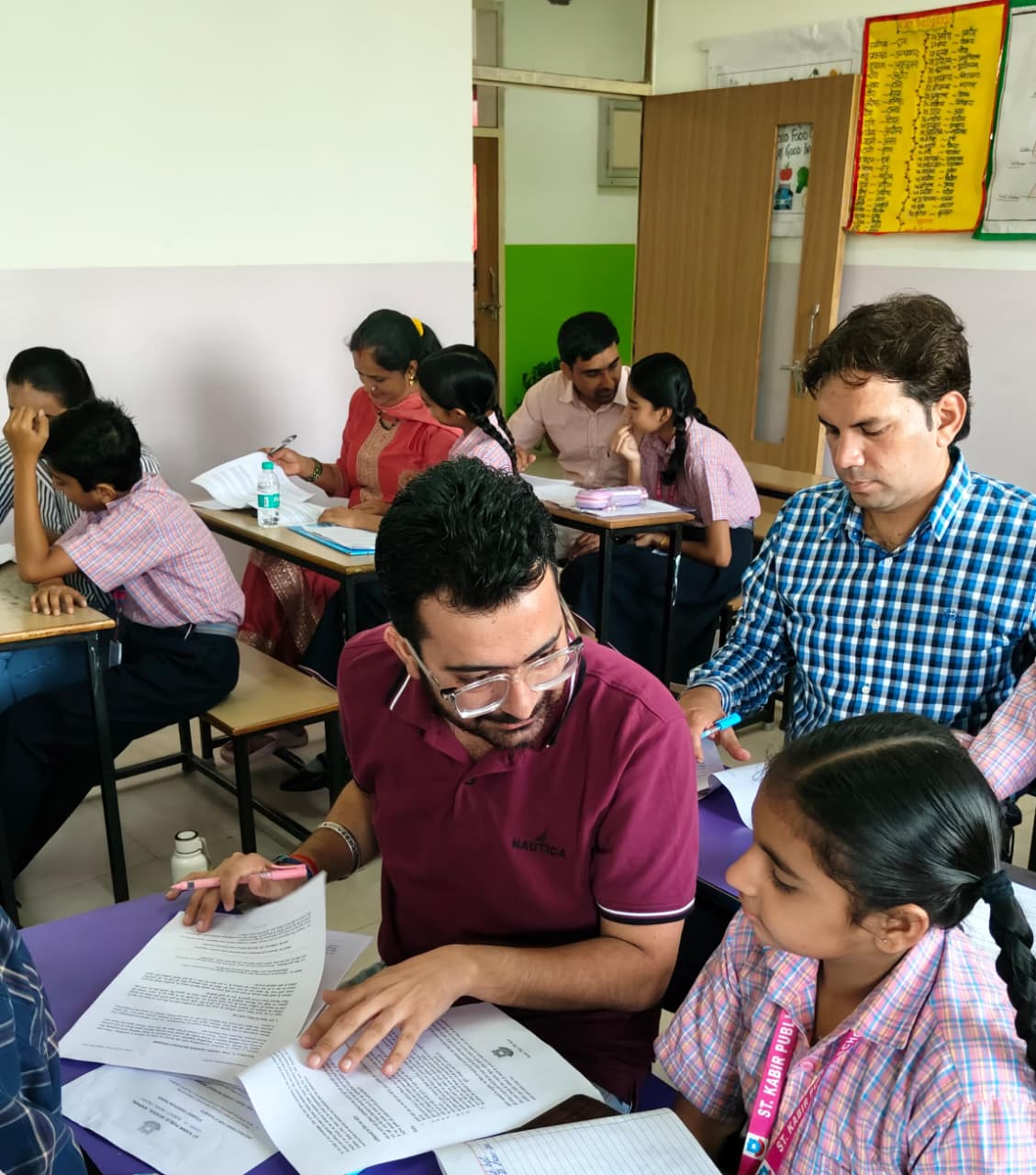
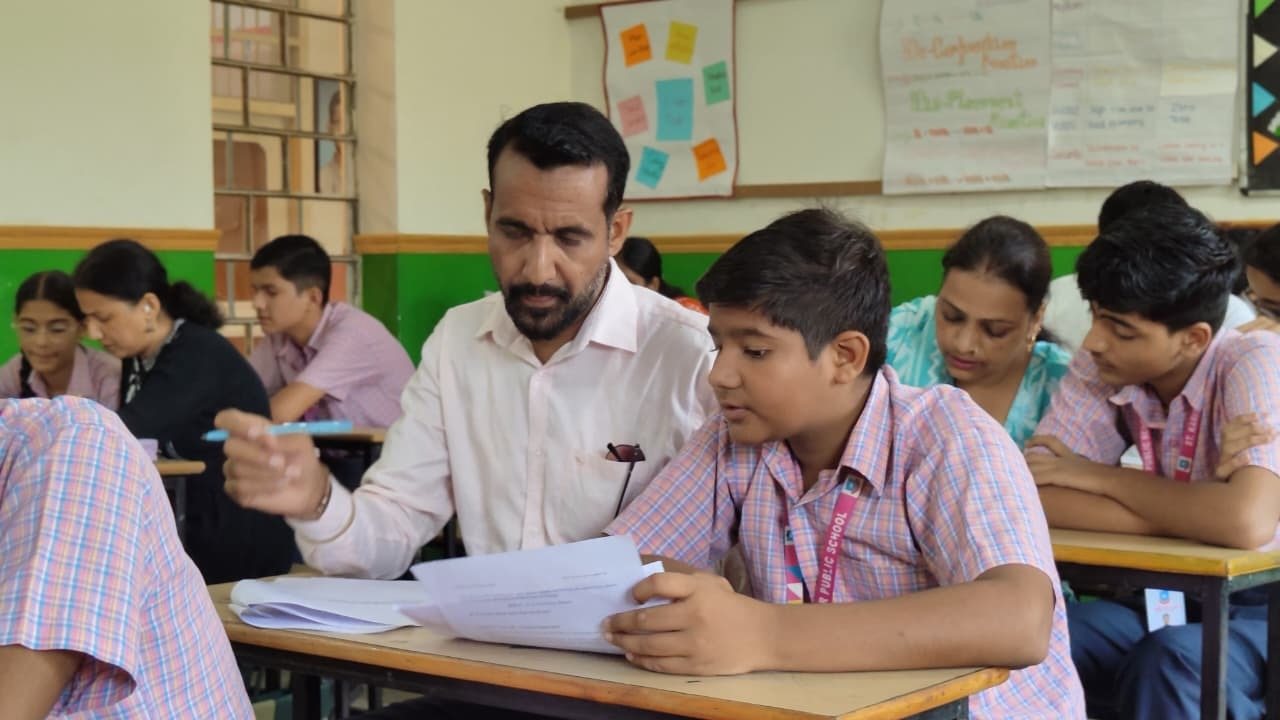
The pilot project held on 19th September 2026 involved students of Classes VI, VIII and X. Students began the examination on their own. Then their parents joined them. Two generations. One bench. A question paper about life.
The independent start mattered. Before an adult offered advice, each child had space to say what they would actually do. The instructions encouraged honest answers, giving children room to express their doubts and fears instead of simply writing what sounded right.
After the first half-hour, parents joined them. Their task was to read, listen, discuss and work through the next part together. For once, a parent’s place in an examination was beside the child. The questions gave them plenty to talk about.
In one Class VI situation, a child was left behind as a crowded train departed. Another explored how to tell a parent about an uncomfortable online experience. The practical question ‘What should the child do?’ opened into something deeper: how could a parent respond so that asking for help would feel possible?
For Class VIII, a scenario described a child pressured into posing with a cigarette, then threatened with having the photograph circulated. A moment of yielding to peer pressure had become a trap. Families discussed how to seek help, face consequences and put things right.
Class X explored disagreement over a career, a fraudulent demand for money, and the challenge of making decisions when fear takes over. These were situations in which knowing the right answer and finding the courage to act on it could be very different things.
The assessment also made space for a quieter discovery. Parents and children were asked to identify qualities they genuinely admired in each other, supported by an actual incident or action. That small requirement made appreciation personal. It invited parents and children to recognise everyday gestures that might otherwise go unnoticed or unspoken.
The message was simple: children should feel safe asking their parents for help, even when they have made a mistake. Together, they discussed how to put things right, take responsibility and avoid repeating the mistake.
According to the school authorities, some parents had initially been anxious about the prospect of an examination. Afterwards, parents appreciated the effort and asked for more such sessions.
Schools routinely invite parents to discuss their children’s performance. Saint Kabir Public School invited them to sit beside their children and talk about the choices, fears and mistakes that marks cannot reveal. The examination ended that morning, but its most important answer may come later: when a child faces a problem and feels able to tell a parent.
Saint Kabir Public School’s initiative also makes a larger point. A school in a small city like Karnal can help shape the future of education. Ideas with the power to change classrooms everywhere need not begin in the world’s biggest cities. Sometimes, they begin with two generations on one bench.